


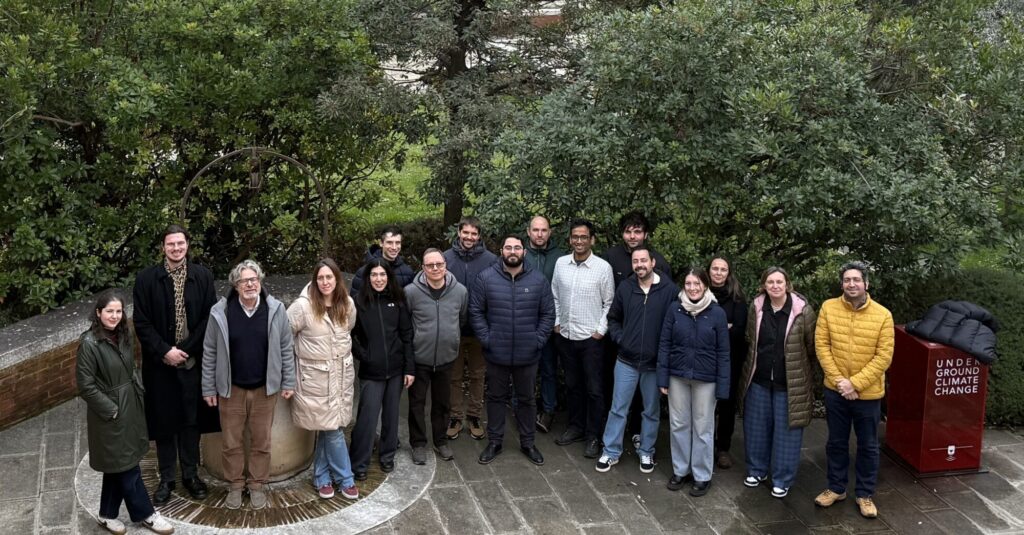
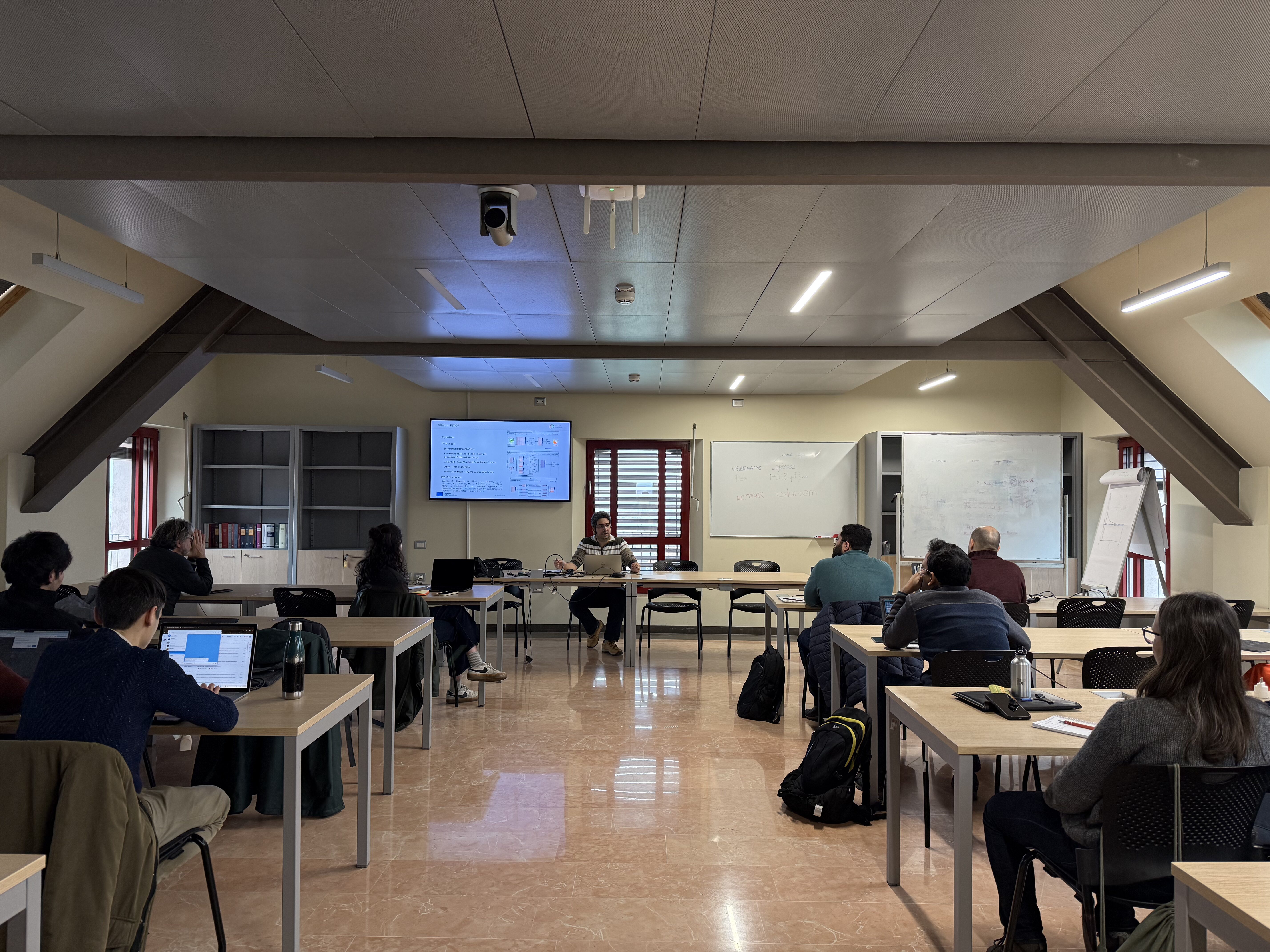
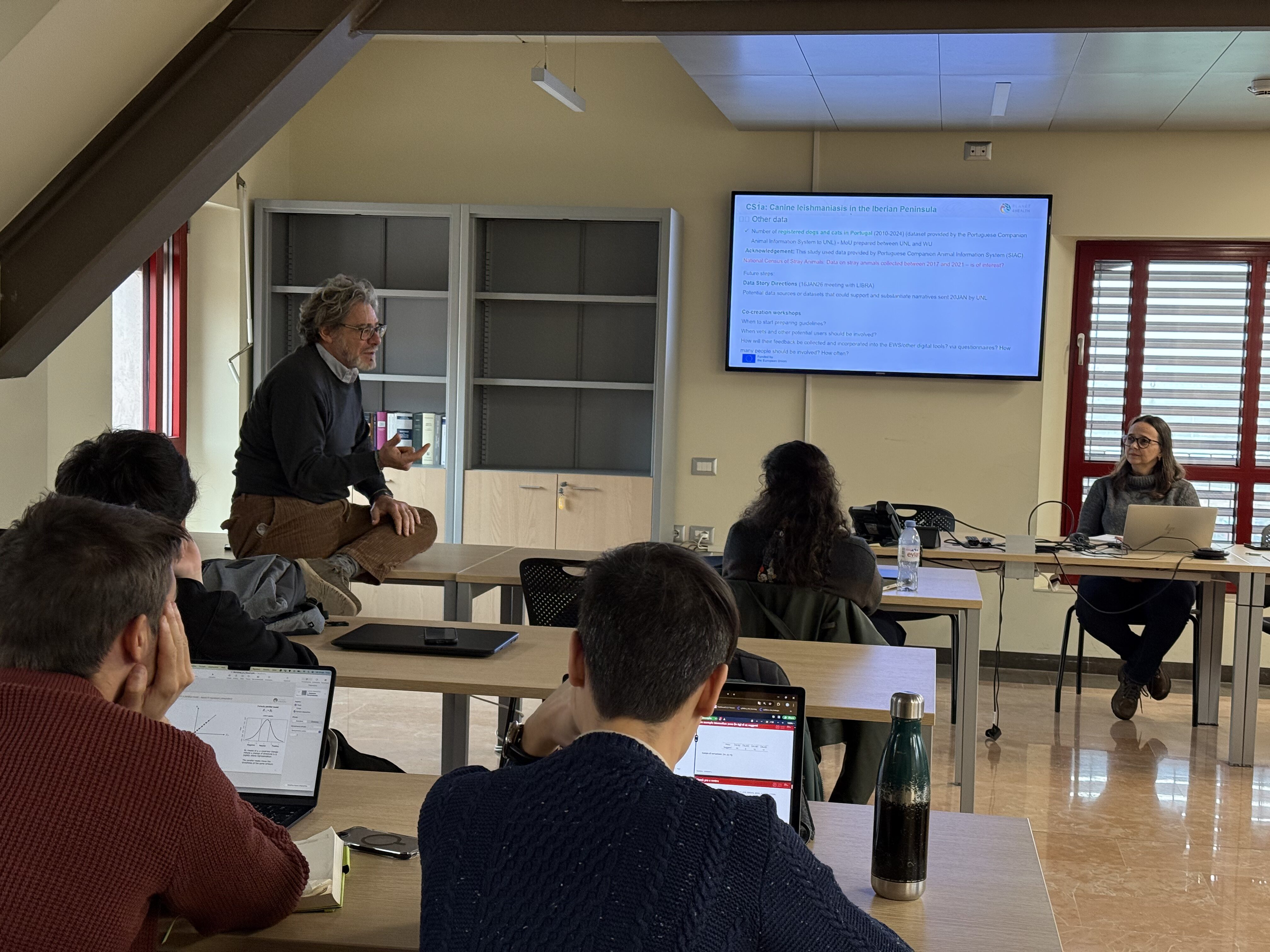
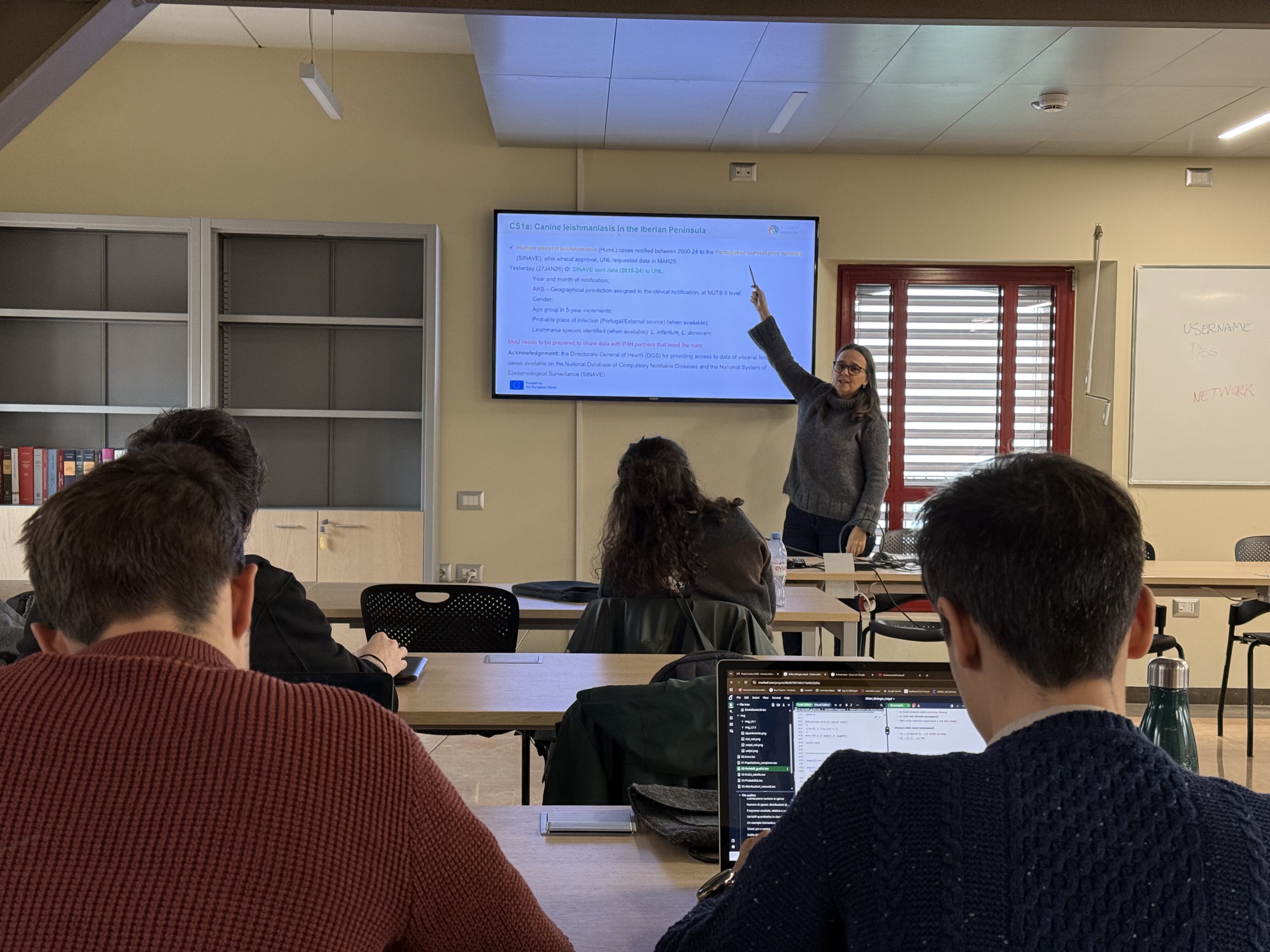
From 29–30 January, PLANET4HEALTH partners held an internal workshop on “OneHealth Effects of Ecological Degradation and Climate Change Case Studies”, organised by Wageningen University and hosted by the project coordinator Ca’ Foscari University. The workshop brought together partners to discuss the analysis and modelling of OneHealth effects of climate change and ecological degradation across PLANET4HEALT Case Studies.
Participating partners included: Predictia, CRTA, WU, UNL, APMVEAC, LIBRA, UFZ, CICERO, UNIVE, SAMRC, AGES, and BFR.
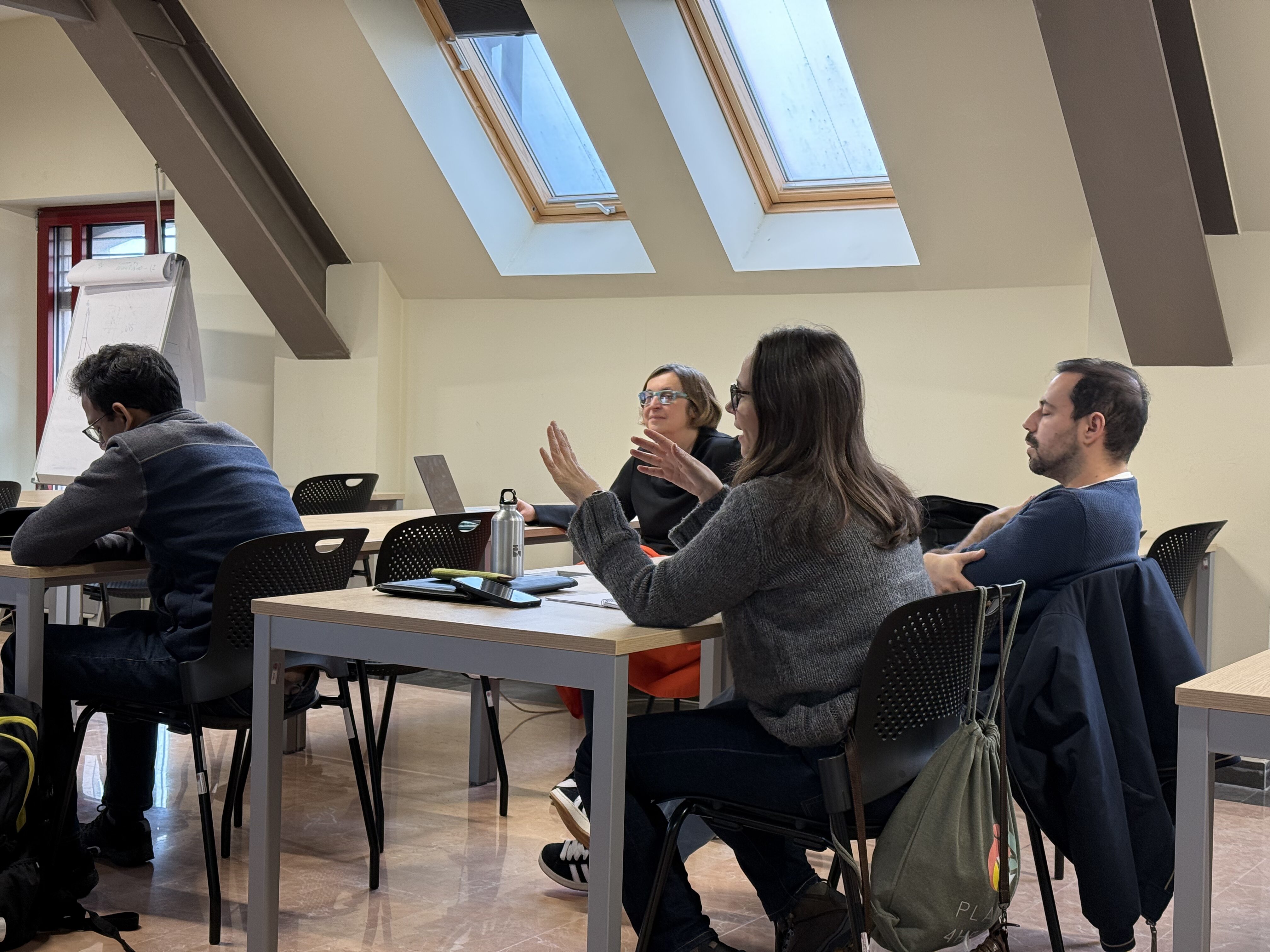
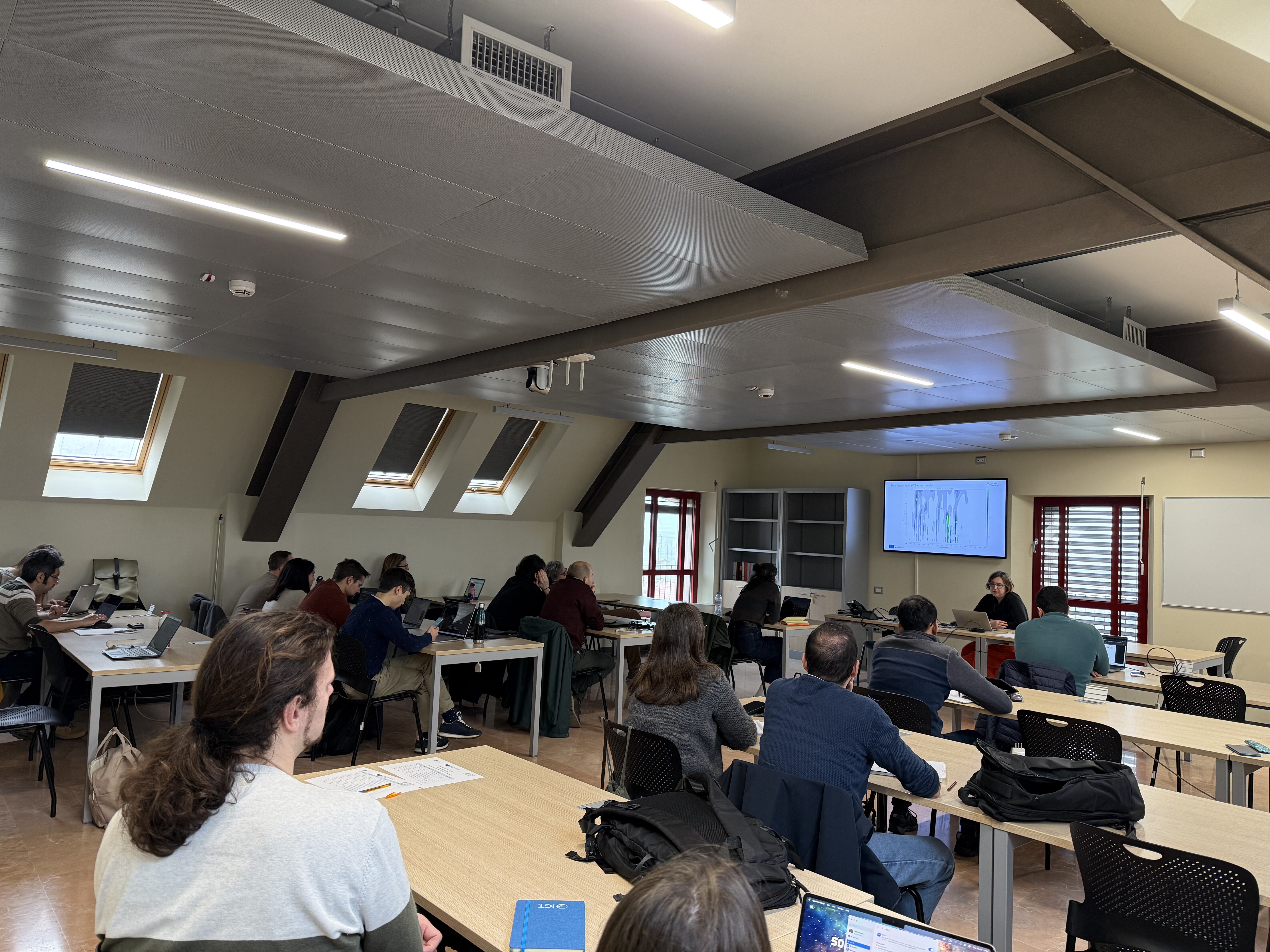
The discussions centred mainly on Case Study 1 (CS1) and Case Study 2 (CS2) , while also starting preliminary work on Case Study 3 (CS3). Participants shared their modelling strategies, compared results, and explored how to develop early warning systems for the different case studies. The first operational version of the Early Warning System (EWS) for CS1 was presented, and the group discussed how similar methods could be applied to CS2.
Case Study 1 – Vector-borne diseases in the Iberian Peninsula
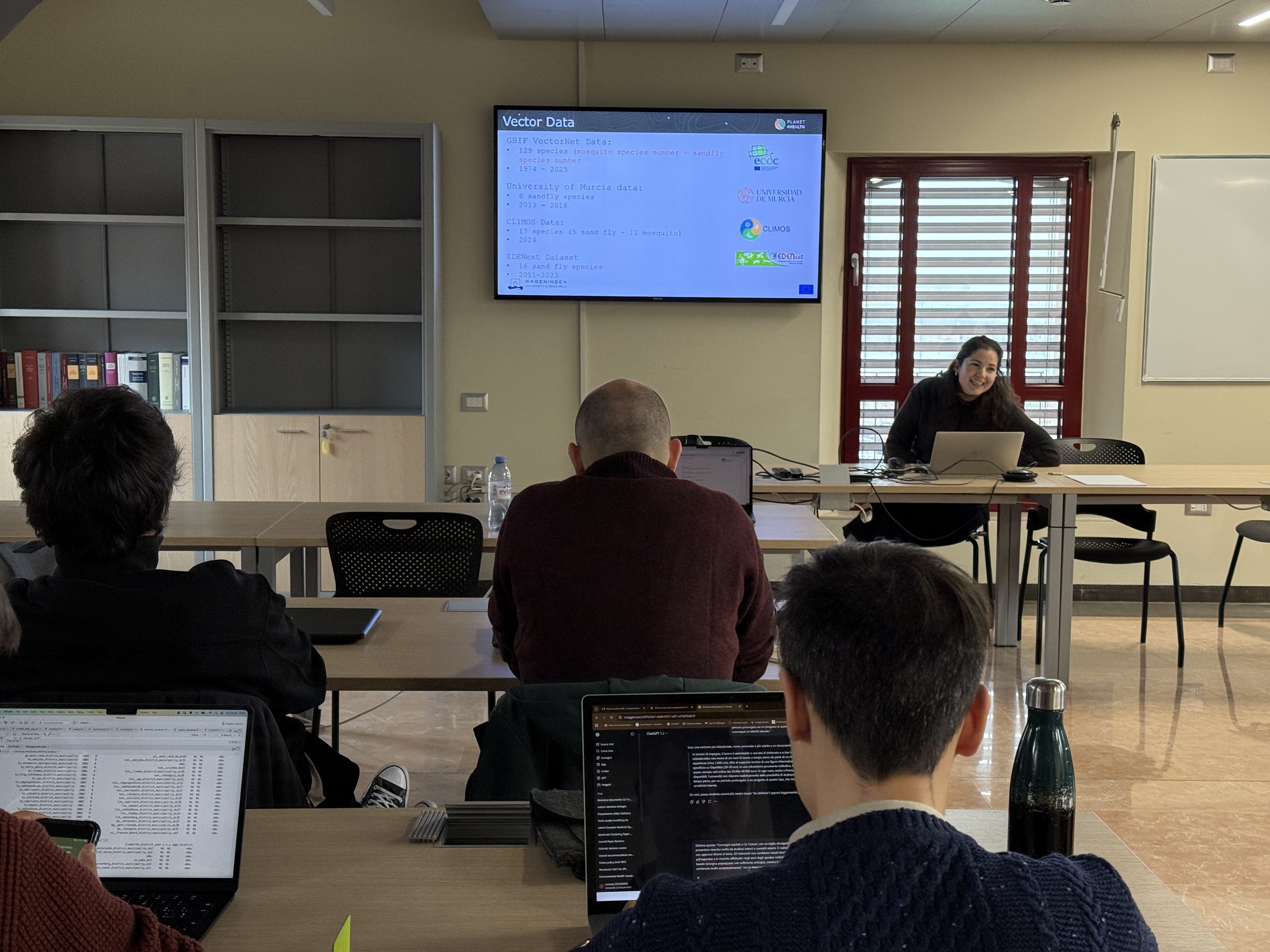
For CS1, the workshop showcased an early operational EWS that combines climate and vector data to forecast sand fly presence in the short term and predict how vector distribution may change over time across the region. Additional modelling approaches were also presented, helping to refine and strengthen the system’s accuracy and usefulness.
Case Study 2 – Air Pollution and Health in South Africa
In CS2, partners shared results from air-quality hotspot analyses and discussed how to link air pollution data with health outcomes. The goal is to integrate these findings into an early warning framework that can help anticipate health risks related to air quality.
Case Study 3 – Food Safety in Central Europe
The workshop also began work on CS3, which focuses on food safety and PFAS contamination in Europe. This session was dedicated to identifying and reviewing available datasets, laying the foundation for future modelling and analysis.
The workshop was a valuable opportunity for the PLANET4HEALTH consortium to align methods, share insights, and move forward with developing operational tools that connect climate, ecology, and health across the project’s case studies.
Authors: F6S & WU team