
Air Pollution Drives Severe Health Impacts in South Africa’s Industrial Heartlands

The PLANET4HEALTH project has officially launched its first policy brief, lighting a critical view on how ambient air pollution directly threatens human health across South Africa’s most heavily industrialized regions.
Authored by project partner the South African Medical Research Council (SAMRC), the brief titled “Air Pollution and Mortality in South Africa’s Priority Areas: Evidence for Urgent Action”, presents critical epidemiological findings that link short-term pollutant exposure to increased mortality. By analyzing over one million deaths recorded between 2011 and 2018, the brief highlights systemic risks to public health and makes an urgent call for targeted, evidence-based policy interventions.
South Africa Launches First Climate and Health Surveillance Platform to Support Climate-Health Intelligence and Decision-Making

South Africa has launched its first national Climate and Health Surveillance platform, available at Climate Health Surveillance South Africa, a pioneering research and decision-support tool designed to strengthen the country’s ability to understand and respond to the growing health impacts of climate change.
APEMVEAC Interview for Veterinária Atual: Canine Leishmaniasis

APMVEAC is helping the PLANET4HEALTH project monitor canine leishmaniasis in Portugal. By combining ten years of dog epidemiological data with environmental factors like wind, soil humidity, and sandfly movement, a new digital tool will allow veterinarians to track vector activity year-round.
One Health Effects of Ecological Degradation and Climate Change
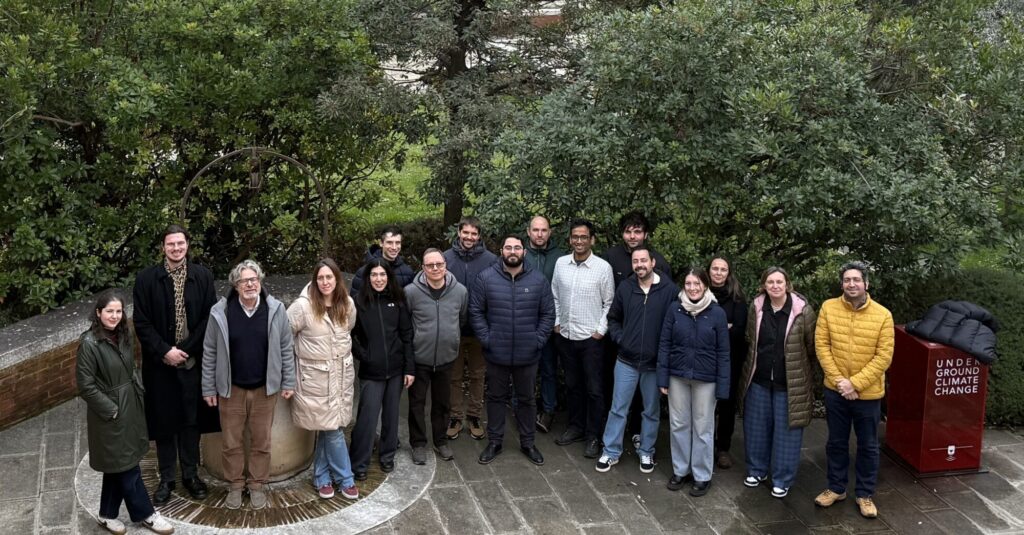
From 29–30 January, PLANET4HEALTH partners held an internal workshop on “OneHealth Effects of Ecological Degradation and Climate Change Case Studies”, organised by Wageningen University and hosted by the project coordinator Ca’ Foscari University. The workshop brought together partners to discuss the analysis and modelling of OneHealth effects of climate change and ecological degradation across PLANET4HEALTH case studies.
Monitoring Air Quality Through Low-cost Sensor Use in South Africa

In thinking about air pollution, one is almost immediately transported to a place of thick smoke
and fog – called smog. Such images pervaded the media in Asia, where people were often seen
walking around with masks.
Vector-Borne Diseases in the Iberian Peninsula: Forecasting the Risk of Leishmaniasis

The vector-borne diseases have always been present in our life, but nowadays, due to recent climate changes and human-induced factors, they are playing a more important and damaging role for human health. The conditions mentioned before have favoured the expansion of the radius of action of mosquitoes and sandflies into new territories that were inaccessible before.
PFAS in Food

Per- and polyfluoroalkyl substances (PFAS) are synthetic organic compounds with interesting chemical
properties. Among other uses, they are used in fire fighting foam for their thermal stability, in medical
and outdoor products for their lipophilic and hydrophobic properties (“lotus effect”), and in frying pans
for both these properties. These desirable properties come to a price: PFAS are very persistent and
therefore accumulate in the environment. And contrary to past belief that such inert substances cannot
be toxicologically relevant, health effects have been shown. There are restrictions on PFAS use, but they
are persistent and accumulate along the food chain.
PLANET4HEALTH in National Geographic Spain: A Deep Dive into Leishmaniasis Prevention

The PLANET4HEALTH project recently received notable recognition: our work is featured in a compelling article by National Geographic Spain. Journalist Daniel Pellicer Roig, a biotechnologist specialising in biomedicine and rare diseases, penned this insightful piece, highlighting the critical issue of leishmaniasis prevention and how projects like PLANET4HEALTH, driven by experts including our partners Carla Maia from NOVA University Lisbon and Suzana Blesic from the Institute for Medical Research, are contributing to real-world solutions.
Vector-borne Diseases in the Iberian Peninsula

Vector-borne diseases have the potential to (re)emerge in the coming decades due climate changes and human-induced conditions favouring the expansion of vectors into new regions, and other aspects of globalisation such as traveling and migration.
Why Climate Change is a Human Health Concern?

Climate change is not only about rising global temperatures, which have significant environmental impacts, but also about how human health is adversely affected.